


As a trusted supplier of fan spray nozzles, I've witnessed firsthand the diverse applications and the critical role these nozzles play across various industries. Fan spray nozzles are used in countless scenarios, from agricultural spraying to industrial cleaning, and their performance can significantly impact the effectiveness of these operations. In this blog, I'll delve into the key factors that affect the performance of fan spray nozzles, providing insights that can help you make informed decisions when selecting and using these essential components.
Fluid Properties
The characteristics of the fluid being sprayed are among the most fundamental factors influencing the performance of fan spray nozzles.
Viscosity
Viscosity refers to a fluid's resistance to flow. High - viscosity fluids, such as thick oils or certain adhesives, flow more slowly than low - viscosity fluids like water. When using a fan spray nozzle with a high - viscosity fluid, the nozzle may experience reduced flow rates. The fluid may not spread evenly in the fan pattern, leading to clumping or uneven coverage. For example, in a painting application, if the paint is too thick, it may not atomize properly, resulting in an inconsistent finish. On the other hand, low - viscosity fluids generally flow more easily through the nozzle, allowing for a more uniform spray pattern. However, if the viscosity is extremely low, the fluid may be more prone to over - atomization, which can cause excessive drift and wasted material.
Density
The density of the fluid also matters. Denser fluids require more energy to move through the nozzle and to break up into droplets. In a fan spray nozzle, a higher - density fluid may require a larger orifice size to maintain an adequate flow rate. If the orifice is too small for a dense fluid, the pressure drop across the nozzle will increase, potentially leading to premature wear of the nozzle components and an inconsistent spray pattern. For instance, when spraying a concentrated chemical solution with a high density, choosing the correct nozzle size is crucial to ensure proper dispersion.
Chemical Composition
The chemical composition of the fluid can have a significant impact on the nozzle's performance and longevity. Corrosive fluids, such as acids or alkalis, can damage the internal surfaces of the nozzle over time. This corrosion can alter the shape of the orifice and the internal flow passages, leading to changes in the spray pattern and flow rate. Some fluids may also contain abrasive particles, like fine sand or metal filings. These particles can erode the nozzle material, especially at high flow velocities, causing the nozzle to wear out more quickly and reducing the quality of the spray.
Operating Conditions
The conditions under which the fan spray nozzle operates are equally important in determining its performance.
Pressure
The pressure at which the fluid is supplied to the nozzle is a critical factor. Higher pressures generally result in smaller droplet sizes and a wider spray angle. In a high - pressure application, such as in a power washing system, the increased pressure can force the fluid through the nozzle at a high velocity, breaking it up into finer droplets. This can improve the cleaning efficiency as the smaller droplets can penetrate more effectively into pores and crevices. However, if the pressure is too high, it can cause excessive wear on the nozzle and may also lead to over - atomization and increased drift. Conversely, low pressures may result in larger droplet sizes and a narrower spray angle. This can be suitable for applications where large - scale coverage with larger droplets is required, such as in some agricultural irrigation systems.
Temperature
Temperature affects both the fluid properties and the nozzle material. As the temperature of the fluid increases, its viscosity typically decreases. This can cause changes in the flow rate and spray pattern, as the fluid will flow more easily through the nozzle. For example, in a hot summer day, a liquid pesticide may have a lower viscosity than in cooler weather, which can affect the uniformity of the spray. Additionally, high temperatures can cause thermal expansion of the nozzle material. If the nozzle is not designed to withstand the temperature changes, this expansion can lead to changes in the orifice size and shape, resulting in a degraded spray pattern.

Flow Rate
The flow rate, which is the volume of fluid passing through the nozzle per unit of time, is closely related to the pressure and the nozzle design. A higher flow rate generally requires a larger orifice size or a higher operating pressure. If the flow rate is too high for a given nozzle, it may cause the spray pattern to become distorted, with large droplets or uneven distribution. In an industrial cooling application, if the flow rate of the cooling water through the fan spray nozzle is not properly regulated, it may not provide sufficient cooling to the target area. Conversely, a flow rate that is too low may not achieve the desired coverage or effect.
Nozzle Design
The design of the fan spray nozzle itself is a major determinant of its performance.
Orifice Size and Shape
The orifice is the opening through which the fluid exits the nozzle. The size of the orifice directly affects the flow rate and the droplet size. A larger orifice allows for a higher flow rate but generally produces larger droplets. In a dust suppression system, a larger orifice may be used to deliver a higher volume of water to quickly settle the dust particles. The shape of the orifice also plays a role. Different shapes, such as circular, oval, or rectangular, can produce different spray patterns. For example, a rectangular orifice is often used to create a wide, flat fan spray pattern, which is ideal for applications like surface coating or cleaning large areas.
Internal Geometry
The internal geometry of the nozzle, including the flow channels and the mixing chamber, affects how the fluid is accelerated and atomized. A well - designed internal geometry can promote better mixing of the fluid and air (if applicable), leading to a more uniform spray pattern. Some nozzles are designed with internal vanes or swirl chambers to create a swirling motion of the fluid, which helps to break up the fluid into smaller droplets and improve the spray pattern. In a fire suppression system, a nozzle with a proper internal geometry can ensure that the water is distributed evenly over a large area to effectively extinguish the fire.
Material and Construction
The material used to construct the nozzle is crucial for its durability and performance. Nozzles can be made from a variety of materials, such as stainless steel, brass, plastic, or ceramic. Stainless steel nozzles are highly resistant to corrosion and wear, making them suitable for use with corrosive fluids or in harsh environments. Brass nozzles are often used for general - purpose applications due to their good combination of strength and cost - effectiveness. Plastic nozzles are lightweight and inexpensive, but they may not be as durable as metal nozzles, especially when exposed to high temperatures or abrasive fluids. Ceramic nozzles are extremely hard and wear - resistant, making them ideal for applications where high - velocity abrasive particles are present, such as in sandblasting.
Environmental Factors
The environment in which the fan spray nozzle operates can also have an impact on its performance.
Air Movement
External air movement, such as wind, can affect the spray pattern and the trajectory of the droplets. In an outdoor spraying application, such as agricultural pesticide spraying, wind can cause the droplets to drift away from the target area. This not only reduces the effectiveness of the treatment but also poses a risk to the surrounding environment and non - target organisms. To mitigate the effects of wind, special nozzles with anti - drift features or spraying techniques can be used. Additionally, in an indoor environment, air currents from ventilation systems can also influence the spray pattern, especially in applications like air humidification or indoor cleaning.
Humidity
Humidity can affect the evaporation rate of the droplets. In a high - humidity environment, the droplets will evaporate more slowly, which can be beneficial in some applications, such as in a greenhouse where maintaining a certain level of moisture is important. However, in other applications, such as in a drying process, high humidity can slow down the drying time and reduce the efficiency of the operation. Low - humidity environments, on the other hand, can cause the droplets to evaporate quickly, which may lead to uneven coverage if the droplets dry before they reach the target surface.
Conclusion
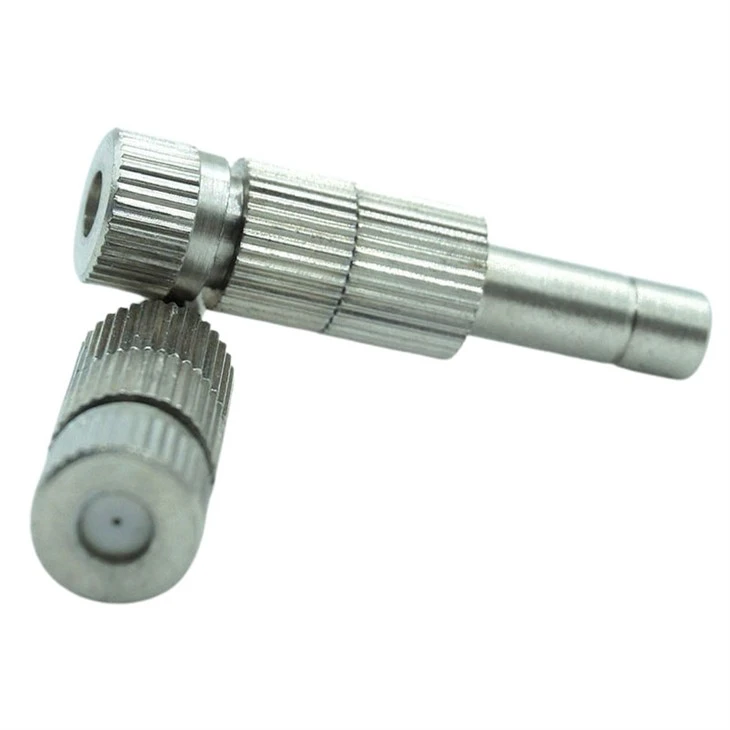
In conclusion, the performance of fan spray nozzles is influenced by a multitude of factors, including fluid properties, operating conditions, nozzle design, and environmental factors. As a supplier of fan spray nozzles, I understand the importance of considering all these factors when selecting the right nozzle for a specific application. We offer a wide range of high - quality fan spray nozzles, such as the Slip Lock Misting Nozzle, Slip Lock Misting Kit Low Pressure Nozzle, and Mist Nozzle 10/24 Thread Low Pressure, which are designed to meet the diverse needs of our customers.
If you're looking for a reliable fan spray nozzle solution, we're here to help. Our team of experts can assist you in choosing the most suitable nozzle based on your specific requirements. Whether you're in the agricultural, industrial, or commercial sector, we have the knowledge and products to ensure optimal performance. Contact us today to discuss your needs and start a procurement negotiation.
References
- ASABE Standards. American Society of Agricultural and Biological Engineers.
- Perry, R. H., & Green, D. W. (1997). Perry's Chemical Engineers' Handbook. McGraw - Hill.
- Spray Nozzle Engineering Manual. Spraying Systems Co.


