


Selecting the right fogger nozzle for a sprayer is a crucial decision that can significantly impact the efficiency and effectiveness of your spraying operations. As a trusted supplier of fogger nozzles for sprayers, we understand the importance of making an informed choice. In this blog post, we will guide you through the key factors to consider when choosing the right fogger nozzle, ensuring that you achieve optimal results for your specific application.
Understanding the Basics of Fogger Nozzles
Before delving into the selection process, it's essential to have a basic understanding of how fogger nozzles work. Fogger nozzles are designed to break down a liquid into fine droplets, creating a fog or mist. This is achieved through various mechanisms, such as pressure, air induction, or ultrasonic vibration. The size of the droplets produced by a fogger nozzle can vary widely, ranging from a few microns to several hundred microns. The droplet size is a critical factor as it determines the coverage area, penetration, and adhesion of the spray.
Factors to Consider When Choosing a Fogger Nozzle
1. Spray Pattern
The spray pattern is one of the most important factors to consider when choosing a fogger nozzle. Different spray patterns are suitable for different applications. For example, a flat fan pattern is ideal for covering large, flat surfaces, such as fields or warehouses. It provides a wide, even distribution of the spray. On the other hand, a cone pattern is better suited for applications that require more concentrated coverage, such as spot treatments or vertical surfaces. There are also full cone and hollow cone patterns, each with its own unique characteristics. A full cone pattern disperses the spray in a solid cone shape, providing uniform coverage over a circular area. A hollow cone pattern, meanwhile, creates a ring-shaped spray pattern, which can be useful for applications where the edges of the spray need to be more concentrated.
2. Droplet Size
As mentioned earlier, droplet size plays a crucial role in the performance of a fogger nozzle. Smaller droplets have a larger surface area, which allows for better coverage and penetration. They are also more likely to adhere to the target surface. However, very small droplets can be easily affected by wind and may drift away from the intended area. Larger droplets, on the other hand, are more resistant to wind but may not provide as much coverage or penetration. The choice of droplet size depends on the specific application. For example, in pest control applications, smaller droplets may be preferred to ensure that the pesticide reaches all the nooks and crannies where pests may be hiding. In contrast, for dust suppression in a construction site, larger droplets may be more suitable as they can quickly settle on the dust particles and prevent them from becoming airborne.
3. Flow Rate
The flow rate of a fogger nozzle refers to the amount of liquid that the nozzle can deliver per unit of time. It is typically measured in gallons per minute (GPM) or liters per minute (LPM). The flow rate you need depends on the size of the area you need to cover and the desired application rate. If the flow rate is too low, it may take a long time to cover the area, and the application may not be uniform. If the flow rate is too high, it may result in overspray and waste of the liquid. When selecting a fogger nozzle, it's important to choose one with a flow rate that matches the capacity of your sprayer and the requirements of your application.

4. Pressure
The operating pressure of a fogger nozzle is another critical factor. Different nozzles are designed to operate at different pressure ranges. The pressure affects the droplet size, spray pattern, and flow rate. Generally, higher pressures result in smaller droplets and a more uniform spray pattern. However, using a nozzle at a pressure higher than its recommended range can cause excessive wear and tear, leading to a shorter lifespan and reduced performance. Conversely, operating a nozzle at a pressure lower than recommended may result in larger droplets and an uneven spray pattern. It's important to check the manufacturer's specifications to ensure that the nozzle is compatible with the pressure capabilities of your sprayer.
5. Chemical Compatibility
The chemicals you plan to use with the fogger nozzle must be compatible with the materials of the nozzle. Some chemicals can be corrosive or abrasive, which can damage the nozzle over time. For example, certain pesticides or fertilizers may react with the metal or plastic components of the nozzle. It's important to choose a nozzle made from materials that are resistant to the chemicals you will be using. Common materials for fogger nozzles include stainless steel, ceramic, and plastic. Stainless steel nozzles are durable and resistant to corrosion, making them suitable for a wide range of chemicals. Ceramic nozzles, such as the Cleanable Ceramic Orifice Misting Nozzle 10/24, are known for their wear resistance and can provide consistent performance over a long period. Plastic nozzles are lightweight and cost-effective, but they may not be suitable for all chemicals.
6. Application Environment
The environment in which the sprayer will be used also influences the choice of fogger nozzle. For example, in outdoor applications, wind can have a significant impact on the spray. In windy conditions, you may need to choose a nozzle that produces larger droplets to reduce drift. In indoor applications, such as in a greenhouse or a factory, factors like temperature, humidity, and the presence of obstacles need to be considered. In a greenhouse, for instance, you may need a nozzle that can provide a fine mist without causing excessive wetting of the plants.
Our Product Range
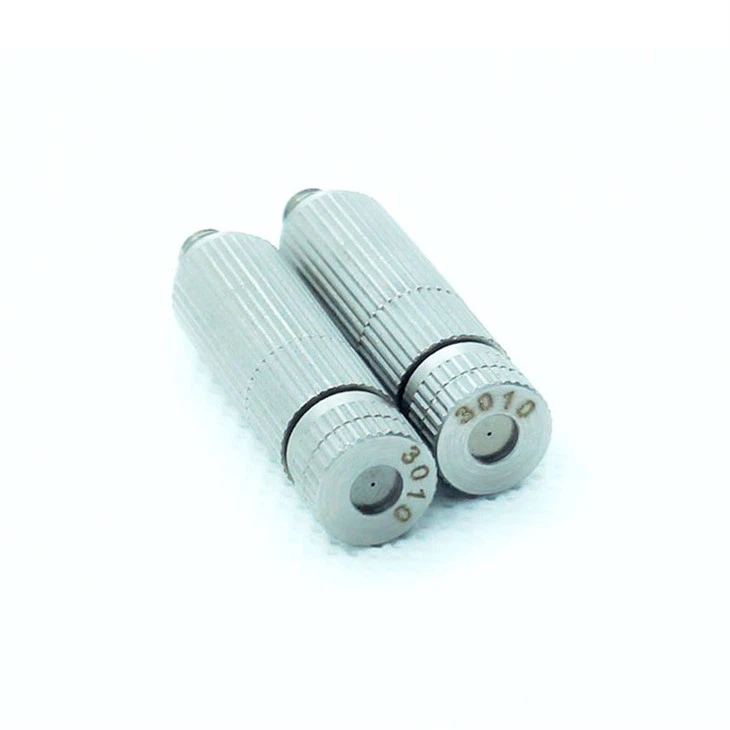
As a leading supplier of fogger nozzles for sprayers, we offer a wide range of high-quality products to meet your diverse needs. Our Replacement Misting Nozzle In Fog Machine is designed to provide reliable performance and easy replacement. It is compatible with most fog machines and can produce a fine, uniform mist. Our Stainless Steel Misting Nozzle is a durable option that is resistant to corrosion and can withstand high pressures. It is suitable for a variety of applications, including industrial cleaning, dust suppression, and pest control.
Conclusion
Choosing the right fogger nozzle for your sprayer is a complex decision that requires careful consideration of multiple factors. By understanding the spray pattern, droplet size, flow rate, pressure, chemical compatibility, and application environment, you can make an informed choice that will ensure the efficiency and effectiveness of your spraying operations. At our company, we are committed to providing you with the best fogger nozzles and expert advice to help you achieve optimal results. If you have any questions or need assistance in selecting the right fogger nozzle for your specific application, please do not hesitate to contact us. We look forward to discussing your requirements and helping you find the perfect solution for your spraying needs.
References
- ASABE Standards. (Year). Spray Nozzle Testing and Performance Evaluation. American Society of Agricultural and Biological Engineers.
- Manufacturer's product manuals for fogger nozzles.
- Research papers on spray technology and application efficiency.


