


Selecting the appropriate fan spray nozzle based on the required droplet size is a critical decision for various industrial, agricultural, and commercial applications. As a supplier of Fan Spray Nozzles, I understand the significance of this choice and the impact it can have on the overall performance of a spraying system. In this blog post, I will share some insights on how to make an informed decision when choosing a fan spray nozzle according to the desired droplet size.
Understanding Droplet Size and Its Importance
Droplet size plays a crucial role in determining the effectiveness of a spray application. Different applications require different droplet sizes to achieve the desired results. For example, in agricultural spraying, smaller droplets are often preferred for better coverage and penetration of plant foliage, while larger droplets are more suitable for reducing drift and ensuring that the spray reaches the target area. In industrial applications, such as cooling or dust suppression, the droplet size can affect the efficiency of the process and the quality of the end product.
The size of droplets is typically measured in microns (μm). Small droplets, usually less than 100 microns, are known as fine droplets, while larger droplets, above 500 microns, are considered coarse droplets. Medium-sized droplets fall in the range of 100 - 500 microns. The choice of droplet size depends on several factors, including the type of application, the target surface, the distance between the nozzle and the target, and the environmental conditions.
Factors Affecting Droplet Size
Several factors can influence the droplet size produced by a fan spray nozzle. Understanding these factors is essential for selecting the right nozzle for your specific needs.
Nozzle Design
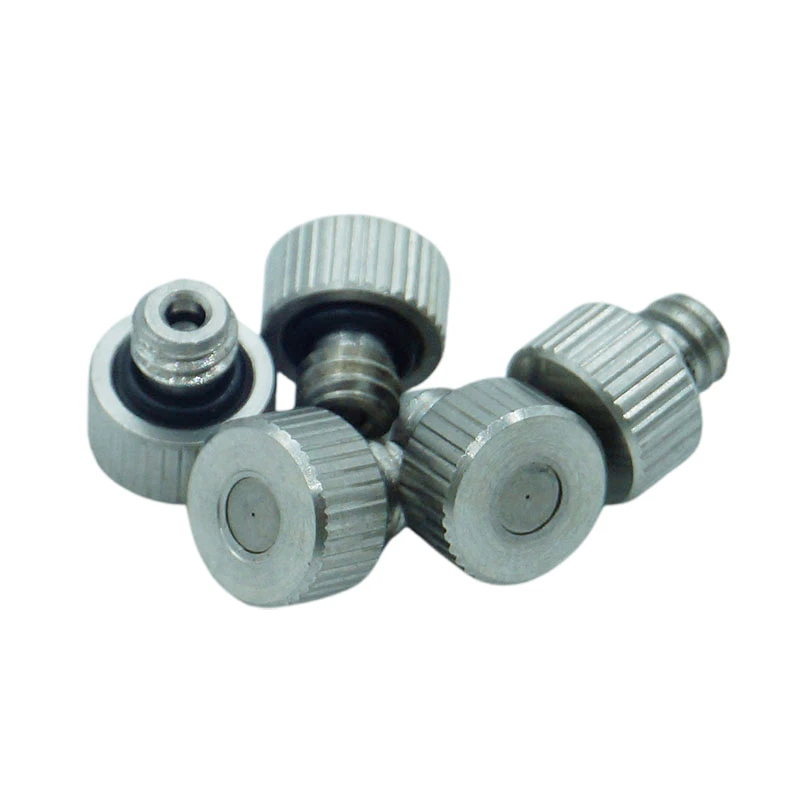
The design of the nozzle is one of the primary factors that determine the droplet size. Different nozzle designs, such as flat fan, hollow cone, and full cone, produce different droplet size distributions. Flat fan nozzles, for example, typically produce a wide, flat spray pattern with a relatively uniform droplet size. Hollow cone nozzles, on the other hand, produce a cone-shaped spray pattern with a wider range of droplet sizes. The internal geometry of the nozzle, including the orifice size, the swirl chamber, and the spray angle, also affects the droplet size.

Pressure
The operating pressure of the spraying system has a significant impact on the droplet size. Generally, higher pressures result in smaller droplets, while lower pressures produce larger droplets. This is because higher pressures increase the velocity of the liquid as it exits the nozzle, causing it to break up into smaller droplets. However, there is a limit to how much the pressure can be increased, as excessive pressure can lead to increased wear and tear on the nozzle and the spraying system.
Liquid Properties
The properties of the liquid being sprayed, such as viscosity, surface tension, and density, also affect the droplet size. Viscous liquids tend to produce larger droplets, while less viscous liquids produce smaller droplets. Surface tension can also influence the droplet size, as liquids with higher surface tension are more likely to form larger droplets. The density of the liquid can affect the momentum of the droplets, which in turn can affect their trajectory and the coverage of the spray.
Selecting the Right Nozzle Based on Droplet Size
Once you have a clear understanding of the factors affecting droplet size, you can start selecting the right fan spray nozzle for your application. Here are some steps to help you make an informed decision:
Define Your Application Requirements
The first step is to clearly define your application requirements. Consider the type of application, the target surface, the desired coverage, and the environmental conditions. For example, if you are spraying pesticides in an agricultural field, you may need a nozzle that produces fine droplets for better coverage and penetration of the plant foliage. If you are using the nozzle for dust suppression in an industrial setting, you may prefer a nozzle that produces larger droplets to reduce drift and ensure that the spray reaches the target area.
Determine the Required Droplet Size
Based on your application requirements, determine the desired droplet size range. You can refer to industry standards or guidelines to get an idea of the appropriate droplet size for your specific application. For example, in agricultural spraying, the recommended droplet size for herbicide applications is typically in the range of 150 - 300 microns, while for fungicide applications, the droplet size may be slightly larger, in the range of 200 - 400 microns.
Consider the Nozzle Design
Once you have determined the required droplet size, consider the nozzle design that is most suitable for your application. As mentioned earlier, different nozzle designs produce different droplet size distributions. Flat fan nozzles are often preferred for applications that require a wide, uniform spray pattern, such as agricultural spraying and surface coating. Hollow cone nozzles are suitable for applications that require a more concentrated spray pattern, such as cooling and fire suppression.
Evaluate the Operating Pressure
The operating pressure of the spraying system is another important factor to consider. Make sure that the nozzle you choose is compatible with the operating pressure of your system. As a general rule, higher pressures are required to produce smaller droplets, but you need to balance the pressure with the wear and tear on the nozzle and the spraying system.
Check the Liquid Properties
Finally, consider the properties of the liquid being sprayed. Make sure that the nozzle is designed to handle the viscosity, surface tension, and density of the liquid. Some nozzles are specifically designed for use with certain types of liquids, so it is important to choose a nozzle that is compatible with your liquid.
Other Considerations
In addition to the factors mentioned above, there are several other considerations that you should keep in mind when choosing a fan spray nozzle.
Nozzle Material
The material of the nozzle can affect its durability and performance. Common nozzle materials include stainless steel, brass, and plastic. Stainless steel nozzles are durable and resistant to corrosion, making them suitable for use in harsh environments. Brass nozzles are also durable and have good heat conductivity, but they may be more prone to corrosion. Plastic nozzles are lightweight and inexpensive, but they may not be as durable as metal nozzles.
Spray Angle
The spray angle of the nozzle determines the width of the spray pattern. A wider spray angle can provide better coverage, but it may also result in a less concentrated spray. Consider the size and shape of the target area when choosing the spray angle of the nozzle.
Flow Rate
The flow rate of the nozzle is another important consideration. The flow rate determines the amount of liquid that is sprayed per unit of time. Make sure that the flow rate of the nozzle is compatible with the requirements of your application.
Conclusion
Choosing the right fan spray nozzle based on the required droplet size is a complex decision that requires careful consideration of several factors. By understanding the factors that affect droplet size, defining your application requirements, and evaluating the different nozzle options available, you can select a nozzle that will provide the best performance for your specific needs.
As a supplier of Fan Spray Nozzles, we are committed to providing high-quality products and expert advice to help you make the right choice. If you have any questions or need further assistance in selecting the appropriate fan spray nozzle for your application, please do not hesitate to contact us. We look forward to working with you to find the best solution for your spraying needs.
References
- ASABE Standards. (2018). Agricultural Sprayer Nozzles. American Society of Agricultural and Biological Engineers.
- Miller, P. C., & Butler Ellis, M. (2016). Spray Droplet Size and Drift. North Carolina State University Extension.
- Nuyttens, D., Baetens, K., & De Schampheleire, L. (2010). Influence of nozzle type, spray pressure, and liquid properties on spray droplet size spectra. Transactions of the ASABE, 53(2), 401 - 410.


