


Hey there! As a supplier of the Fan Shaped Spray Nozzle, I've been diving deep into how these nifty little devices interact with the surrounding air. It's pretty fascinating stuff, and I'm stoked to share it with you.
Let's start with the basics. A fan-shaped spray nozzle is designed to disperse liquid in a flat, fan-like pattern. When you turn on the flow of liquid through the nozzle, it exits at a high velocity. As soon as this liquid jet hits the air, all sorts of interesting things start to happen.
One of the first interactions is atomization. The high - velocity liquid jet breaks up into tiny droplets when it comes into contact with the air. The air acts as a kind of barrier and a disruptor. The friction between the liquid and the air molecules causes the liquid to break apart. The smaller the droplets, the better the dispersion and coverage of the spray. This is super important in a lot of applications, like agricultural spraying, where you want to evenly cover a large area with pesticides or fertilizers.
The shape of the fan spray also plays a huge role in how it interacts with the air. The flat, wide pattern of the fan spray creates a large surface area of contact with the air. This means that more air molecules can interact with the liquid droplets. As the droplets move through the air, they can pick up or lose heat and moisture. For example, in a cooling application, the liquid droplets will evaporate as they interact with the warm air. This evaporation process absorbs heat from the surrounding air, resulting in a cooling effect. It's like a mini - air - conditioning system!
The angle of the fan spray is another crucial factor. A wider fan angle will cover a larger area, but it also means that the droplets will have to travel through more air. This can cause the droplets to slow down more quickly and potentially be affected by wind or air currents. On the other hand, a narrower fan angle will give a more concentrated spray, and the droplets will have less air resistance to deal with. So, depending on your specific needs, you can choose the right fan angle for your application.
Now, let's talk about the air flow around the nozzle itself. When the liquid is ejected from the nozzle, it creates a kind of pressure difference in the surrounding air. This pressure difference can cause air to be drawn in towards the spray. This entrained air can help to further disperse the droplets and carry them over a greater distance. It's like a natural assist for the spray.
In some cases, the interaction between the fan - shaped spray and the air can also lead to the formation of a mist. The fine droplets can remain suspended in the air for a period of time, creating a misty effect. This is really useful in applications like dust suppression, where the mist can capture and weigh down the dust particles, preventing them from becoming airborne.

Another interesting aspect is the effect of air humidity on the spray. If the air is already very humid, the evaporation of the liquid droplets will be slower. This can change the way the spray behaves and how far it can travel. In a dry environment, the droplets will evaporate more quickly, which might be beneficial in some cases, like in a drying process.
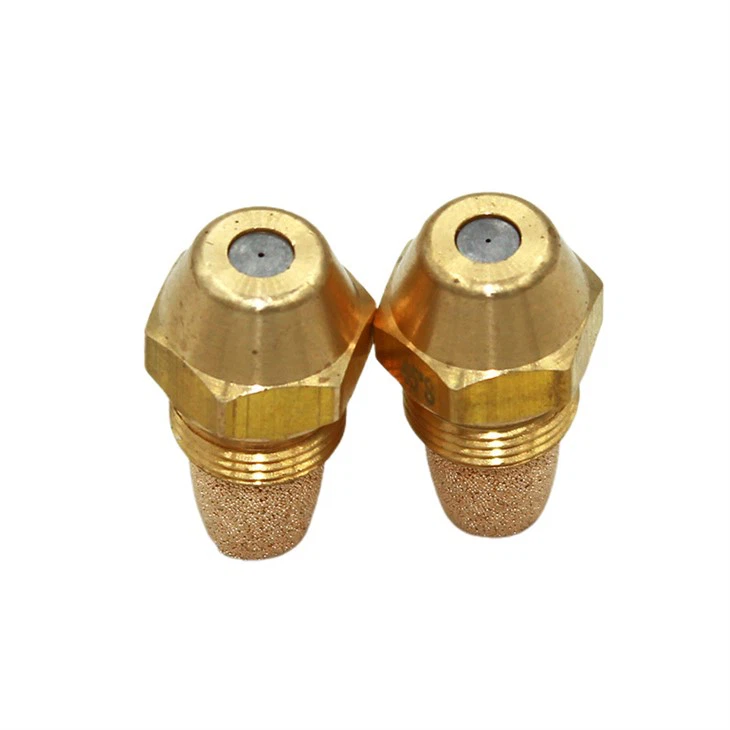
When it comes to the materials used in the fan - shaped spray nozzles, they can also influence the interaction with the air. For example, a brass nozzle like the ones we supply at our company is durable and can withstand high - pressure applications. The smooth surface of the brass can also help the liquid to flow more evenly out of the nozzle, which in turn affects how the spray interacts with the air. A rough or corroded nozzle surface can cause uneven flow and disrupt the spray pattern, leading to less efficient interaction with the air.
We also offer other related products like the Mist Nozzle End Plug and the Mosquito Nozzle. The Mist Nozzle End Plug is useful for closing off the end of a nozzle system when it's not in use, preventing debris from getting in and affecting the spray. The Mosquito Nozzle, as the name suggests, is designed specifically for mosquito control. It can produce a fine mist that can effectively reach into small spaces where mosquitoes might hide.
Understanding how the fan - shaped spray nozzle interacts with the surrounding air is crucial for getting the most out of these products. Whether you're in the agricultural, industrial, or pest - control business, having the right knowledge about spray nozzles can make a big difference in the success of your operations.
If you're looking for high - quality fan - shaped spray nozzles or any of our other related products, don't hesitate to reach out. We're here to help you find the perfect solution for your specific needs. Whether you need advice on the right nozzle for your application or want to place an order, we're just a message away. Let's work together to make your spraying operations more efficient and effective!
References:
- "Spray Nozzle Handbook" by Spraying Systems Co.
- Research papers on fluid dynamics and atomization from various academic journals.


